International Indigenous Women’s Forum (FIMI)
- Peru
- Global
- fimi-iiwf.org
- FIMI's YouTube
Channel Focus Areas:

Advancing Indigenous Women’s Rights and Leadership

Strengthening the Women's Funding Movement
Mission:
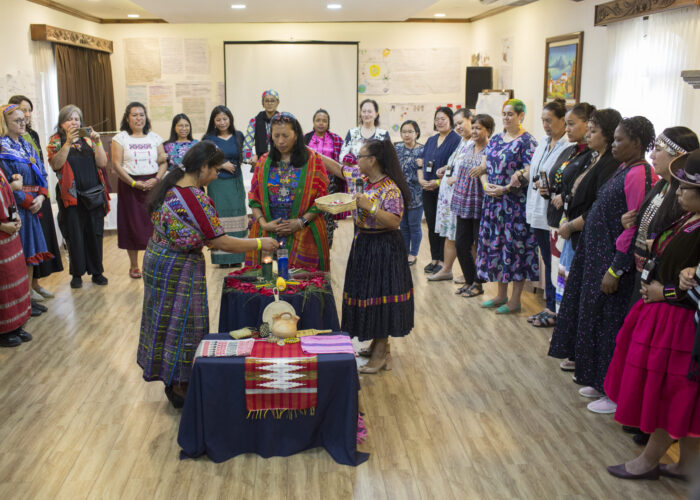
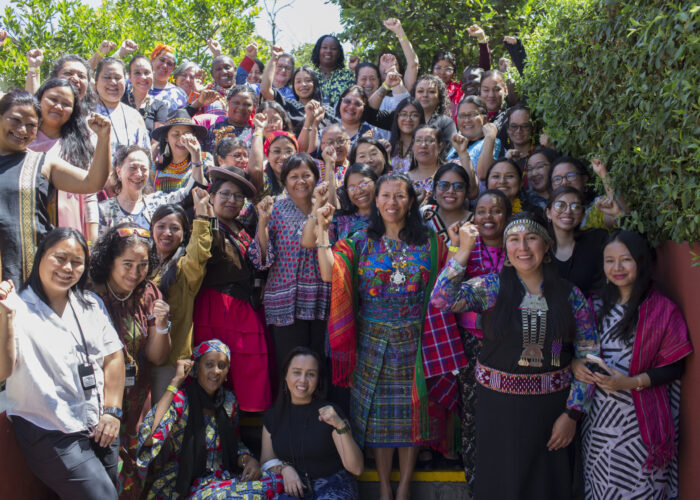
The International Indigenous Women’s Forum/Foro Internacional de Mujeres Indígenas (best known as FIMI, by its Spanish initials) is a network of Indigenous women leaders from Asia, Africa, and the Americas. FIMI’s mission is to bring together Indigenous women leaders, and human rights activists from different parts of the world to coordinate agendas, build capacity, and to develop leadership roles. FIMI encourages indigenous women’s participation in international decision-making processes by ensuring the consistent and serious inclusion of indigenous women’s perspectives in all discussions regarding human rights.
Impact:
FIMI was chosen to be one of four women’s funds based in the Global South to manage grants from the Leading from the South Fund (LFSF) launched in January 2017 by the Dutch Ministry of Foreign Affairs. With a 40 million Euro investment over four years, LFSF represents the first bilateral partnership with a group of women’s funds each based in the Global South. Not only does LFSF represent a significant amount of new money for women’s rights movements to be managed by women-led organizations; it is also significant that the Dutch Ministry chose to partner with women’s funds as sole fund managers; and to send funding directly to the Global South instead of through North-based organizations.
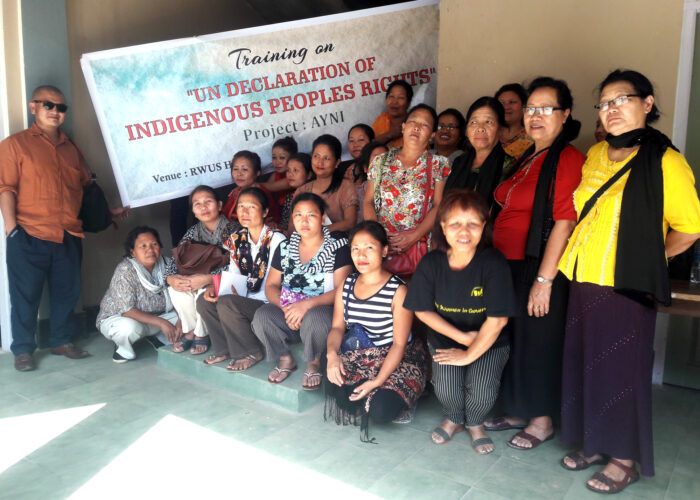
In 2013-14, the Indigenous Women’s Fund/AYNI funded 18 projects organized by indigenous women’s organizations for a total of US$90,000 awarded.
FIMI developed a Database of Indigenous Women’s Organizations in Africa and Latin America.
The Indigenous Women’s Fund launched its first call for proposals in 2009-2010 through different organizations from the Americas, Asia and Africa. The selection prioritized projects that were innovative, sustainable, and promoted indigenous peoples’ “well being,” in many cases giving organizations their first grants. By gaining experience in resource mobilization, design, execution and evaluation of projects, indigenous women’s organizations develop and strengthen capacities in order to access to greater resources. To read more about the first round of 13 grantees of the Indigenous Women’s Fund, please download the report here.
Channel Grants:
2021-24: Three year general operating grant to FIMI to continue supporting their work promoting Indigenous women’s individual and collective human rights and the achievement of their wellbeing.
2020: General operating support grant to support FIMI in their work supporting Indigenous women’s rights, including their AYNI Indigenous Women’s Fund, capacity building and through fostering cross-cutting linkages among all of FIMI’s programs.
2018: Grant to FIMI/ IIWF to increase support to Indigenous women with disabilities via grants, capacity building and through fostering cross-cutting linkages among all of FIMI’s programs. Channel funds will continue to support FIMI’s grantmaking arm, the AYNI fund. Ultimately FIMI aims to address the existing gap in the fulfillment of rights of indigenous women with disabilities, their exclusion and limited access to social services, participation and engagement with decision making in their respective communities.
2015: Grant (through the fiscal sponsorship of CHIRAPAQ, Centro de Culturas Indígenas de Perú) to support FIMI’s Indigenous Women’s Fund (AYNI), their philanthropic and grantmaking arm and the August 2015 launch of their grantmaking cycle. AYNI provides indigenous women’s groups around the world with support and capacity building through a competitive Request for Proposal process and through grants.
2013: Grant (through the fiscal sponsorship of CHIRAPAQ, Centro de Culturas Indígenas de Perú) to support FIMI’s Indigenous Women’s Fund (AYNI), their philanthropic and grantmaking arm, for monitoring and evaluation processes for their grantees including field visits, and for funds to help them include their grantees in advocacy processes in which FIMI is involved such as the UN Permanent Forum on Indigenous Issues, the 2014 World Conference on Indigenous Peoples, Cairo + 20 and Beijing + 20, among others.
Additionally in 2013, Channel made a grant (through the fiscal sponsorship of CHIRAPAQ, Centro de Culturas Indígenas de Perú) to support participation of FIMI’s network of indigenous women from around the world in the World Conference of Indigenous Women: Progress and Challenges Regarding the Future We Want, Oct. 28-30 in Lima, Perú. The World Conference enabled indigenous women and youth from the seven regions of the world to be informed, reach consensus, and to establish a common, political statement as a world-level indigenous women’s movement. The general objective of the conference focused on the collective generation of key advocacy tools to ensure the validity and recognition of the human rights of indigenous children, youth and women at the different international processes such as Cairo +20, Beijing +20, Post-2015, MDGs, and the UN World Conference on Indigenous Peoples which took place Sept. 22-23, 2014 in New York. The World Conference of Indigenous Women concluded with a Declaration and a Plan of Action.
2012: Grant (through the fiscal sponsorship of CHIRAPAQ, Centro de Culturas Indígenas de Perú) to support the Indigenous Women’s Fund of IIWF/FIMI, to provide grants to indigenous women’s organizations in Latin America, Asia and Africa. In 2013, the Fund launched another call for proposals and aims to support, via grants, indigenous women’s leadership and strengthen institutions that advance indigenous women’s rights.
2009: Grant (through the fiscal sponsorship of CHIRAPAQ, Centro de Culturas Indígenas de Perú) to support the newly formed Indigenous Women’s Fund, the philanthropic arm of IIWF/FIMI, a grant-making body that will provide long-term, flexible funding for Indigenous women’s organizations as they respond to key political changes taking place locally, nationally, regionally and internationally. The Fund supports the Indigenous women’s movement, builds Indigenous women’s leadership and strengthens institutions that advance Indigenous women’s rights. Via grants, the Fund supports groups implementing programs that advance Indigenous women’s rights in one or more of the following areas: 1) Educational Empowerment; 2) Economic Empowerment; 3) Political Participation; 4) Institutional Strengthening.
2008: Through a contribution to the Association of Women’s Rights in Development (AWID)’s Movement Building Fund (intended to facilitate the participation of grassroots women leaders and activists from various social movements all over the world at the AWID Forum), Channel supported the travel and participation of several women from the International Indigenous Women’s Forum to attend the 11th AWID International Forum on Women’s Rights and Development, The Power of Movements. in Cape Town, South Africa on Nov. 14-17, 2008.
With FIMI, Channel helped design and facilitate an interactive session for the AWID Forum called “Transformative Learning and Leadership: Feminist Voices from the Ground,” with indigenous women leaders from Peru, Bangladesh, South Africa and the Philippines.
Impact:
ICAN has emerged as a key leader in redefining what women peacebuilders look like and what they do. The goal of their collaborative campaign and global call to action to stand with women peacebuilders, She Builds Peace: Stand with Women Peacebuilders, is to ensure that women peacebuilders are safe and protected, that governments fulfill their obligations to include them in peace and security decision making, and that women peacebuilders are appreciated and resourced to continue their critical work.
They had created the Women’s Alliance for Security Leadership (WASL), a growing alliance of independent women-led organizations in over 30 countries. WASL brought together existing women rights and peace practitioners, organizations, and networks actively engaged in preventing extremism and promoting peace, rights and pluralism, to enable their systematic and strategic collaboration.
ICAN has also created awareness of the lack of funding mechanisms adequate to meeting the needs of women peacebuilders. In response, they went on to create their own, the Innovative Peace Fund which enabled the channeling of bilateral and philanthropic funds to ICAN’s partners within WASL.
ICAN had produced a myriad number of key resources that have informed women peacebuilders, policymakers and elected officials. Their “What the Women Say” country-specific and regional briefs are gendered political and security analyses carried out in partnership with local activists and international organizations. There are briefs on the Arab Spring, Tunisia, Iran, Egypt, Syria, Iraq, Sri Lanka, Libya, Turkey, Morocco and Yemen.
Channel Grants:
2021-24: General operating grant to ICAN to support its work promoting inclusive and sustainable peace in countries affected by violent conflict, extremism, militarism, and closing political space. Funds helped ICAN to continue its advocacy, funding and capacity strengthening initiatives, via programs such as its Innovative Peace Fund (IPF), the “first and only independent, multi-donor, global fund dedicated to supporting women-led peacebuilding organizations,” the Women’s Alliance for Security Leadership (WASL), and the She Builds Peace campaign amongst others.
2020: Grant to support ICAN’s work on human rights and strengthening the capacity of women’s peacebuilding organizations. ICAN accomplishes this partly via She Builds Peace: Stand with Women Peacebuilders, a collaborative campaign and a global call to action to stand with women peacebuilders. ICAN’s goal was to ensure that women peacebuilders were safe and protected, that governments fulfilled their obligations to include them in peace and security decision making, and that women peacebuilders were appreciated and resourced to continue their critical work.
2018: Grant to support the Innovative Peace Fund to enable the channeling of bilateral and philanthropic funds to ICAN’s partners within the Women’s Alliance for Security Leadership (WASL), a growing alliance of independent women-led organizations in over 30 countries. WASL brought together existing women rights and peace practitioners, organizations, and networks actively engaged in preventing extremism and promoting peace, rights and pluralism, to enable their systematic and strategic collaboration.
In addition, funds supported ICAN’s leadership and knowledge production as ICAN informed and influenced international peace and security policies and practices with its ‘What the Women Say’ gendered political and security briefs and with the production and development of audio-visual/infographics materials (and translations into Arabic). These materials conveyed the key findings of ICAN’s groundbreaking reports to a wider audience.
2011-2016: Annual grants to support ICAN to strategically link women’s rights and peacebuilding groups in the Middle East & North Africa (MENA) and Asia regions via a solidarity network of support created to enable more sharing of strategies around peace activism and promotion of women’s rights. This support was focused on the implementation of South-South/Capacity Building exchanges as part of ICAN’s work linking women’s rights and peace building groups in the region to each other and helping to elevate their voices and concerns to global policy fora.
As part of this process, ICAN began holding annual MENA/Asia Regional Meetings on Women’s Rights, Peace and Security, the first one of which was in Sept. 2012 in Istanbul. In addition, support helped fund the provision of urgent programmatic support (eg. for campaigns, workshops, grassroots outreach, organizational development etc.) in the form of small seed grants to partners on the ground.
ICAN held its 6th Annual Women, Peace & Security Forum, “From Extreme Violence to Violent Extremism: Women’s Strategic Engagements to Provide Positive Sustainable Solutions” in Morocco in November 2017. Women peace builders and human rights defenders from over 35 countries shared their expertise, strategies and approaches for building strategic alliances to reduce violence, counter extremism, foster social cohesion and sustain space for independent civil society.
2013-2015: A series of annual grants to the Global Network of Women Peacebuilders program of ICAN to raise awareness, build capacity, and monitor the implementation of UNSCR 1325 and 1820 in South Sudan. Through community radio projects, GNWP built strong local support for the women, peace and security agenda resolutions and promotes their full and effective implementation especially at the local level. GNWP also built leadership capacity among the women and girls of South Sudan through workshops, literacy training, and the Girl Ambassadors for Peace program. GNWP tried to enhance the capacities of Congolese and South Sudanese women and their local communities to use UNSCR 1325 and 1820 to hold duty bearers accountable, to find peaceful solutions to the conflict, and to promote women and girls’ rights in conflict and post-conflict situations. Funds supported the training of the Girl Ambassadors for Peace which included components on radio and video production.
2010: Grant to support the Global Network of Women Peacebuilders (GNWP) Project which used media to facilitate development and implementation of community-based sexual violence prevention programs in conflict-affected situations using existing national action plans on 1325 and 1820 and equivalent policies. GNWP worked to popularize and create support for ICAN’s Women’s Security Campaign (WSC) project. The project included production of radio and TV spots and use of social networks as well as mobilization of national and community media associations.
As part of “Living Without Fear: Media and Local Communities Working Together to Prevent Sexual Violence in Conflict Affected Areas – Using UNSCR 1325 and 1820 as Policy Framework,” GNWP, in partnership with local partners Corporación de Investigación y Acción Social y Económica (CIASE) and Red Nacional de Mujeres, conducted five community-focused capacity building workshops with over 130 women and men from February 8 to March 2, 2012 in the cities and municipalities of Cali, Buenaventura, Cartagena, Montes de Maria, and Pasto, Colombia. The workshop participants were predominantly indigenous and Afro-Colombian. Together, GNWP and its partners developed scripts and produced three radio spots that focused on UNSCR 1325 that were eventually played on 10 radio programs over various radio stations in Cali, Cartagena, Montes de Maria, Palmira, Jamundi and Yumbo. Please find more information about the Colombia workshops here. GNWP held additional workshops in September 2012.
2009: Grant to conduct several case studies as part of an assessment of the impact of UN Security Council Resolution 1325 in the 10 years since its passage. The ICAN/MIT report, “What the Women Say: Participation and UNSCR 1325,” included case studies from six countries (Liberia, Sri Lanka, Aceh, Israel/Palestine, Colombia and Uganda) and key recommendations. A critical aspect of the project was to return to women in conflict zones to “capture their voices and experiences regarding the relevance and impact of 1325 and related activities in their countries.” The report accuses donors of “not practicing what they preach,” because they have failed to support and include women’s participation in peace-related activities.
2008: Grant to support a 1325 Global Bridges workshop in Kandy, Sri Lanka focused on bringing women leaders together to discuss implementation of Security Council Resolution 1325 and to ensure women’s participation in conflict resolution and peacebuilding in conflict zones. In September 2008 ICAN led a five day training for 26 diverse Sri Lankan women on women, peacebuilding, and the implementation of Security Council Resolutions 1325 and 1820.
Impact:
ICAN has emerged as a key leader in redefining what women peacebuilders look like and what they do. The goal of their collaborative campaign and global call to action to stand with women peacebuilders, She Builds Peace: Stand with Women Peacebuilders, is to ensure that women peacebuilders are safe and protected, that governments fulfill their obligations to include them in peace and security decision making, and that women peacebuilders are appreciated and resourced to continue their critical work.
They had created the Women’s Alliance for Security Leadership (WASL), a growing alliance of independent women-led organizations in over 30 countries. WASL brought together existing women rights and peace practitioners, organizations, and networks actively engaged in preventing extremism and promoting peace, rights and pluralism, to enable their systematic and strategic collaboration.
ICAN has also created awareness of the lack of funding mechanisms adequate to meeting the needs of women peacebuilders. In response, they went on to create their own, the Innovative Peace Fund which enabled the channeling of bilateral and philanthropic funds to ICAN’s partners within WASL.
ICAN had produced a myriad number of key resources that have informed women peacebuilders, policymakers and elected officials. Their “What the Women Say” country-specific and regional briefs are gendered political and security analyses carried out in partnership with local activists and international organizations. There are briefs on the Arab Spring, Tunisia, Iran, Egypt, Syria, Iraq, Sri Lanka, Libya, Turkey, Morocco and Yemen.
Channel Grants:
2021-24: General operating grant to ICAN to support its work promoting inclusive and sustainable peace in countries affected by violent conflict, extremism, militarism, and closing political space. Funds helped ICAN to continue its advocacy, funding and capacity strengthening initiatives, via programs such as its Innovative Peace Fund (IPF), the “first and only independent, multi-donor, global fund dedicated to supporting women-led peacebuilding organizations,” the Women’s Alliance for Security Leadership (WASL), and the She Builds Peace campaign amongst others.
2020: Grant to support ICAN’s work on human rights and strengthening the capacity of women’s peacebuilding organizations. ICAN accomplishes this partly via She Builds Peace: Stand with Women Peacebuilders, a collaborative campaign and a global call to action to stand with women peacebuilders. ICAN’s goal was to ensure that women peacebuilders were safe and protected, that governments fulfilled their obligations to include them in peace and security decision making, and that women peacebuilders were appreciated and resourced to continue their critical work.
2018: Grant to support the Innovative Peace Fund to enable the channeling of bilateral and philanthropic funds to ICAN’s partners within the Women’s Alliance for Security Leadership (WASL), a growing alliance of independent women-led organizations in over 30 countries. WASL brought together existing women rights and peace practitioners, organizations, and networks actively engaged in preventing extremism and promoting peace, rights and pluralism, to enable their systematic and strategic collaboration.
In addition, funds supported ICAN’s leadership and knowledge production as ICAN informed and influenced international peace and security policies and practices with its ‘What the Women Say’ gendered political and security briefs and with the production and development of audio-visual/infographics materials (and translations into Arabic). These materials conveyed the key findings of ICAN’s groundbreaking reports to a wider audience.
2011-2016: Annual grants to support ICAN to strategically link women’s rights and peacebuilding groups in the Middle East & North Africa (MENA) and Asia regions via a solidarity network of support created to enable more sharing of strategies around peace activism and promotion of women’s rights. This support was focused on the implementation of South-South/Capacity Building exchanges as part of ICAN’s work linking women’s rights and peace building groups in the region to each other and helping to elevate their voices and concerns to global policy fora.
As part of this process, ICAN began holding annual MENA/Asia Regional Meetings on Women’s Rights, Peace and Security, the first one of which was in Sept. 2012 in Istanbul. In addition, support helped fund the provision of urgent programmatic support (eg. for campaigns, workshops, grassroots outreach, organizational development etc.) in the form of small seed grants to partners on the ground.
ICAN held its 6th Annual Women, Peace & Security Forum, “From Extreme Violence to Violent Extremism: Women’s Strategic Engagements to Provide Positive Sustainable Solutions” in Morocco in November 2017. Women peace builders and human rights defenders from over 35 countries shared their expertise, strategies and approaches for building strategic alliances to reduce violence, counter extremism, foster social cohesion and sustain space for independent civil society.
2013-2015: A series of annual grants to the Global Network of Women Peacebuilders program of ICAN to raise awareness, build capacity, and monitor the implementation of UNSCR 1325 and 1820 in South Sudan. Through community radio projects, GNWP built strong local support for the women, peace and security agenda resolutions and promotes their full and effective implementation especially at the local level. GNWP also built leadership capacity among the women and girls of South Sudan through workshops, literacy training, and the Girl Ambassadors for Peace program. GNWP tried to enhance the capacities of Congolese and South Sudanese women and their local communities to use UNSCR 1325 and 1820 to hold duty bearers accountable, to find peaceful solutions to the conflict, and to promote women and girls’ rights in conflict and post-conflict situations. Funds supported the training of the Girl Ambassadors for Peace which included components on radio and video production.
2010: Grant to support the Global Network of Women Peacebuilders (GNWP) Project which used media to facilitate development and implementation of community-based sexual violence prevention programs in conflict-affected situations using existing national action plans on 1325 and 1820 and equivalent policies. GNWP worked to popularize and create support for ICAN’s Women’s Security Campaign (WSC) project. The project included production of radio and TV spots and use of social networks as well as mobilization of national and community media associations.
As part of “Living Without Fear: Media and Local Communities Working Together to Prevent Sexual Violence in Conflict Affected Areas – Using UNSCR 1325 and 1820 as Policy Framework,” GNWP, in partnership with local partners Corporación de Investigación y Acción Social y Económica (CIASE) and Red Nacional de Mujeres, conducted five community-focused capacity building workshops with over 130 women and men from February 8 to March 2, 2012 in the cities and municipalities of Cali, Buenaventura, Cartagena, Montes de Maria, and Pasto, Colombia. The workshop participants were predominantly indigenous and Afro-Colombian. Together, GNWP and its partners developed scripts and produced three radio spots that focused on UNSCR 1325 that were eventually played on 10 radio programs over various radio stations in Cali, Cartagena, Montes de Maria, Palmira, Jamundi and Yumbo. Please find more information about the Colombia workshops here. GNWP held additional workshops in September 2012.
2009: Grant to conduct several case studies as part of an assessment of the impact of UN Security Council Resolution 1325 in the 10 years since its passage. The ICAN/MIT report, “What the Women Say: Participation and UNSCR 1325,” included case studies from six countries (Liberia, Sri Lanka, Aceh, Israel/Palestine, Colombia and Uganda) and key recommendations. A critical aspect of the project was to return to women in conflict zones to “capture their voices and experiences regarding the relevance and impact of 1325 and related activities in their countries.” The report accuses donors of “not practicing what they preach,” because they have failed to support and include women’s participation in peace-related activities.
2008: Grant to support a 1325 Global Bridges workshop in Kandy, Sri Lanka focused on bringing women leaders together to discuss implementation of Security Council Resolution 1325 and to ensure women’s participation in conflict resolution and peacebuilding in conflict zones. In September 2008 ICAN led a five day training for 26 diverse Sri Lankan women on women, peacebuilding, and the implementation of Security Council Resolutions 1325 and 1820.